This is How to Japanese, a monthly newsletter with something about Japan/Japanese and a dash of いろいろ.
日本・日本語:Passive Handholds
I’ve been extremely fortunate with apartment hunting in Osaka. I arranged a “monthly mansion” for my first month after relocating and used the first few weeks to get to know the city. I replied to a few listings on Suumo, and the first person to contact me was a realtor who responded within 15 minutes and, despite my initial skepticism, ended up being completely above board. He charged no fees for an apartment introduction. He also put me in the extremely convenient neighborhood of Awaji. His reasoning: It was a quick commute to work and put me on a direct line to Kyoto, a super nice perk to have when living in Osaka. (Awaji also has a direct connection to Shin-Osaka Station, which is really, really nice to have when you need it.)
I went to him again when I moved to a larger apartment and had a similar experience, but if I remember correctly, I picked out the apartment and neighborhood this time. It was kind of luck of the draw, to be honest. I don’t remember exactly how I found my current spot other than by trial and error looking at listings near the direct train lines to my office. Strangely enough, I am once again on a direct line to Kyoto and not far from a direct line to Shin-Osaka.
My neighborhood is much different this time, however. Awaji is kind of a commuter town, filled with one-bedroom apartments, and the bustling station seems to be a product of two Hankyu lines crossing and proximity to Shin-Osaka. My current neighborhood in Joto-ku (literally, “east of the castle”: 城東区), on the other hand, is a pretty standard residential neighborhood, laid out in a grid and boring at first glance.
But the more we’ve lived here, the more we’ve started to notice all the local shops. We don’t have a major shopping arcade. There are two smaller ones nearby, but they are in varying states of disrepair, so most of these little cafes and restaurants are on the first floor of small, mixed-use buildings, nestled into the neighborhood or on some of the larger side streets. There are pancake cafes, coffee roasters, a place that specializes in tiramisu, and a lot of great bakeries. (Sadly the reading cafe that I wrote about previously closed up shop.)
One of these that we’ve fallen in love with is a restaurant that’s difficult to describe: It’s a teppanyaki-style spot with an open kitchen run by two young men with just a few tables and counter spots, but they don’t serve your standard, beef-heavy teppanyaki fare. Instead, they have small plates of vegetables and meat with a few rice dishes to top things off. The clean, modern design made it a little intimidating to approach until we were hungry one night and decided to call and see if they had space. Since then, we’ve become regulars and love bringing friends there.
One friend we went with was so impressed with their service and the simplicity of their setup—one guy runs the kitchen, and the other handles front of house—that she told the staff they had 侍魂 (samurai damashī, samurai spirit). I’ll note here that the woman making this comment was Japanese, so it didn’t feel othering at all, but it was perhaps a unique compliment, and when the front of house guy received it, he replied 侍魂、初めて言われました (Samurai damashī, hajimete iwaremashita, That’s the first time anyone’s said we have samurai spirit/No one’s ever said we have samurai spirit before).
This struck me as a really funny, useful little phrase that can be used to respond to a comment/compliment in a variety of different ways. You could use it to genuinely express thanks for a compliment that you’ve never received before. But you could also use it as a self-deprecating deflection for an unusual/unwanted compliment. The staff member’s response was somewhere in between these two, probably closer to the former.
初めて言われました also strikes me as a “handhold,” so to speak, for the Japanese passive form. Japanese expression takes such a different approach from English in many instances that trying to figure out unfamiliar patterns can sometimes feel like scaling a sheer cliff that’s completely smooth: There’s nowhere to grab onto. If you can find even one or two phrases that make sense to you, these can often serve as points of access that allow you to climb higher and reach other expressions.
It’s easy enough to understand that 言います (iimasu, say/to say) becomes 言われます (iwaremasu, is said) in passive and 言われました (iwaremashita, was said) in the past tense form of the passive, but it’s not clear exactly how these forms are used without a little more context.
One way 言います and 言いました are used is with the quotative particle と (to) or って (tte) to mark what someone says in dialogue or to introduce yourself. For example, 私はダニエルと言います (Watashi wa Daniel to iimasu, I’m Daniel, lit. “I’m called Daniel”), or 彼は「がんばりましょう」と言いました (Kare wa ‘Ganbarimashō’ to iimashita, He said, “Let’s give it our all.”). In the former sentence, “I” is the narrator doing the saying, and in the latter, a narrator is telling someone else what “he” said.
Simple enough…but Japanese often leaves out the explicit subject, and this is even more frequently the case with 言われます and 言われました precisely because there’s no need to mention the specific person doing the speaking.
A good example from social media shows the owner of a French bulldog using 言われました to describe a comment someone made when they were out one day:
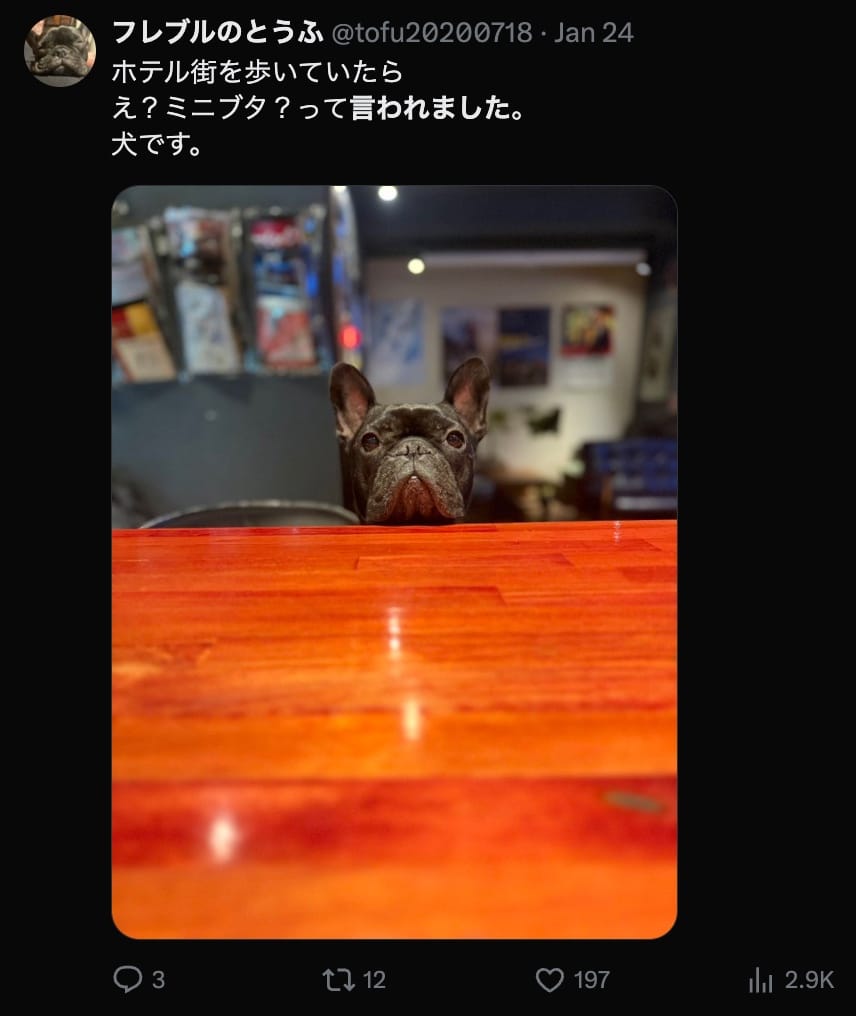
ホテル街歩いていたら
え?ミニブタ?って言われました。
犬です。
I was walking around the hotel neighborhood,
and someone said, Huh? Is that a mini pig?
I’m a dog.
I’ve translated this naturally in English, but the Japanese is more literally something like:
I was walking around the hotel neighborhood,
and Huh? Is that a mini pig? was said about me (by someone).
I’m a dog.
I put “by someone” in parenthesis because that person isn’t explicitly in the Japanese, but that person definitely exists and is a specific single person. But who they are is irrelevant for the very funny post that is written from the perspective of this dog Tofu. In Japanese it’s more convenient and natural to maintain the subject of the first clause (“I was around around the hotel neighborhood”) and use the verb 言われました than it is to switch to a different subject like 誰か (dareka, someone) or 彼女 (kanojo, she).
The same is true with 初めて言われました. I guess you could put in a subject and make them do the saying (or in this case not saying), but it would end up being long and awkward…maybe something like 今まで誰も侍魂と言ってくれていません (Ima made dare mo samurai damashī, to itte kurete imasen) or そう言った人はあなたが初めてです (Sō itta hito wa anata ga hajimete desu). I don’t even know if these work. PLEASE don’t ever use this Japanese.
Instead, when someone has said something about you, just use the passive 言われました. If you need to mention the specific person who made the comment, mark them with the particle に (ni). For example, the bulldog could have said, え?ミニブタ?って変な人に言われました (E? Mini-buta? tte hen na hito ni iwaremashita, A strange person said, Huh? Is that a mini pig?)
Returning to 初めて言われました, it literally means something like “This is the first time (that) was said (about me).” In context, however, all the information is packed into the sentence: the person/people doing the saying as well as what they are saying. The easiest English translation is “That’s the first time anyone has said that to me.” But I also like the inverse “No one’s ever said that to me that before.”
Hopefully this gives you a handhold to pull yourself upward and access other passive phrases.
いろいろ:
- Speaking of other passive phrases, check out the blog post for a few additional patterns, including a link to one of the very first blog posts I ever wrote back in 2008 about the adversative passive.
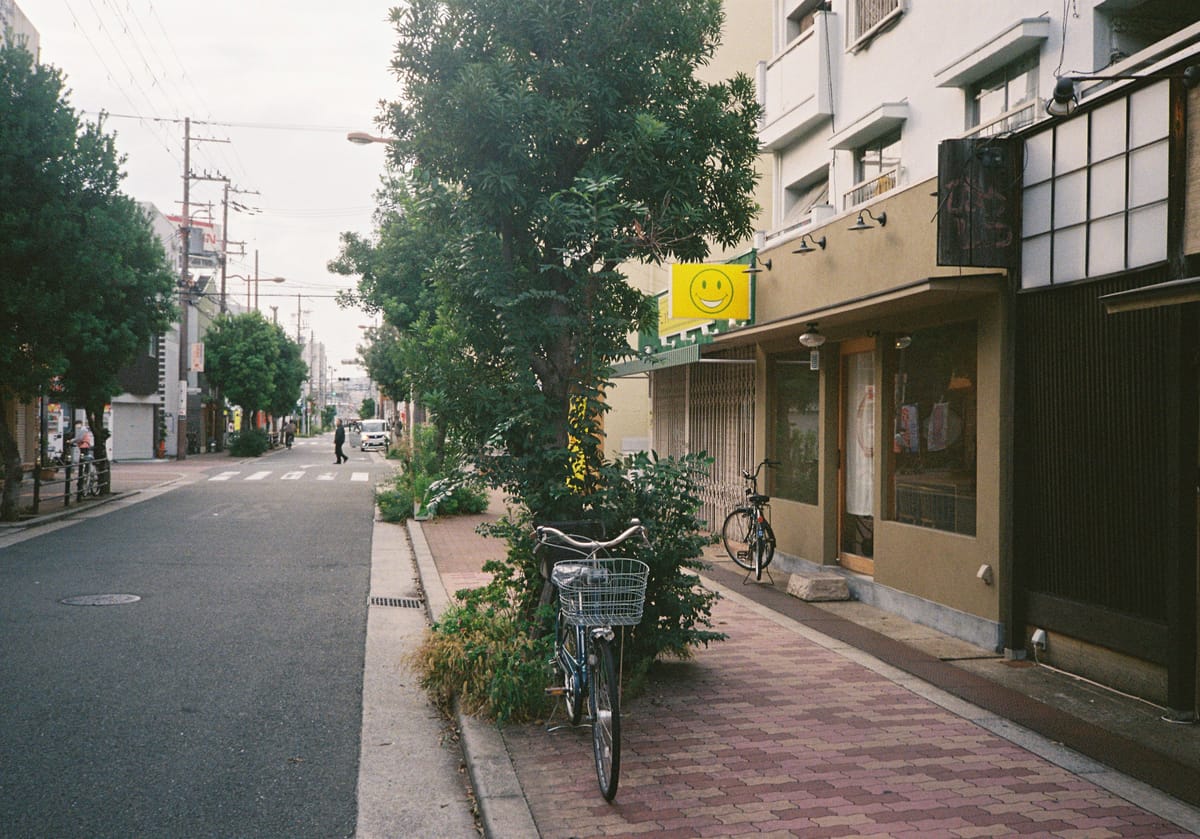
- I’ve purposefully not given away the specific restaurant above (shown in the photo). I don’t want to risk the overtourism gods and draw too much attention to the place (not that I have enough of a readership to do so, to be perfectly honest, but it’s just not worth the risk). If you live in Osaka and are curious, email me and I’m be glad to share. I’ll also gladly introduce you to my realtor if you happen to be apartment hunting.
- In the podcast I mention a few recipes. I’ll link those here. Hasegawa Akari’s tofu-komatsuna takikomi rice. And Ajinomoto’s takikomi chicken rice. I started a thread over on Bluesky for recipes that are easy to make in Japan.
- Murakami has a new novella out in the March edition of Shinchō. It’s a fourth installment in his Kaho series with the title “Kaho and the Motorcycle Man, and Scarlett Johansson” (夏帆とモーターサイクルの男、そしてスカーレット・ヨハンソン), and I think it’s the longest at 250 manuscript pages, although I’ve realized that I missed one last November with the story “Kaho and the Termite Queen” (夏帆とシロアリの女王), which I may end up shelling out extra cash to purchase on Mercari. The second in the series, the first novella titled “The Musashi-sakai Anteater” (武蔵境のありくい), was not very good and had the same weaknesses that I noted in my review of The City and Its Uncertain Walls.

Member discussion: